Showing posts with label Classical Conversations. Show all posts
Showing posts with label Classical Conversations. Show all posts
Wednesday, September 3, 2014
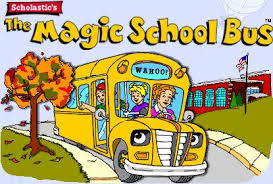
Magic School Bus series
A great resource we have found for studying science is the Magic School Bus series. There are different levels of books as well as videos. You can even purchase science kits. Scholastic also has a page that has games and activities. SM and LM both love the series. They pick out these books from the library on their own. We also use them to supplement our science topics for CC. This week we read In Search of the Missing Bones. I highly recommend this series. The girls think they are listening to a fun book, but they are also learning at the same time. It's great!

Tuesday, August 26, 2014
Exciting Mommy Moment
Yesterday was our first review day after CC started on Friday last week. My parents came over to visit that evening and my Mom asked SM how school had been that morning. SM pulls out our CC trifold board and reads off all of the subject. Pulls out the US map and points out the 5 states and capitals that we learned and then tries to quiz my parents. We have definitely come a long way. SM would not "perform" for others at all last year. She always knew the materials, but was reluctant to show others what she was learning. This makes me so excited!!!

Monday, August 25, 2014
Is home-school time consuming?
I was talking with another home-school Mom the other day. She was saying how a lot of people (that don't homeschool) ask her how she can spend that much time every day. She kind of laughs at it now because each school day doesn't last that long. We are usually done with school by lunch time if SM cooperates. Our time is actually spent learning/teaching. This isn't like public school where there are a bunch of other kids that the teacher has to keep on track. We can focus and individualize the learning and get it done quickly because it's just one or two kids. One of the things that I love about CC is that when LM is added to the mix we will be covering the same memory work. The two girls will be working together on most of the material. Then I can spend individual time on math and reading.
I do spend some time researching, but most of it is reading emails and blogs or on Pinterest. I can spend 30 minutes here and there doing that. I love doing the research part ... I'm bad about implementing it. At this point in time though, SM is getting everything that she needs. All of my research is for other things to supplement the material we are covering or some fun acitivities that I might want to try one day. One of the big things that is stressed in CC is a "stick in the sand" mentality. Keep it simple. We don't need to go overboard on extra stuff. I have a list of books that I check out of the library to supplement the topics we are covering in CC. If we get to it, great, if we don't it's no big deal.
I love being home and being able to do this with my girls. There are moments of frustration, but I know that this is the best thing for my girls. This is how I want to be spending my time right now!

I do spend some time researching, but most of it is reading emails and blogs or on Pinterest. I can spend 30 minutes here and there doing that. I love doing the research part ... I'm bad about implementing it. At this point in time though, SM is getting everything that she needs. All of my research is for other things to supplement the material we are covering or some fun acitivities that I might want to try one day. One of the big things that is stressed in CC is a "stick in the sand" mentality. Keep it simple. We don't need to go overboard on extra stuff. I have a list of books that I check out of the library to supplement the topics we are covering in CC. If we get to it, great, if we don't it's no big deal.
I love being home and being able to do this with my girls. There are moments of frustration, but I know that this is the best thing for my girls. This is how I want to be spending my time right now!
Sunday, August 3, 2014
Why we homeschool and why we chose Classical Conversations
"The answer to our education crisis is for parents to recover their role as parents before the Lord, according to His Word alone. The biblical answer is to be found in parents assuming the responsibility which God has given to them, and only to them, for the education and upbringing of their children." - Douglas Wilson
I thought that this was an interesting quote and explains one of the reasons we homeschool. I'm not very good at explaining why we are homeschooling. It can't be summed up in just a few sentences. There are so many reasons why we chose this path for our family. A parent who spends years studying with a child to show themselves approved unto God, a workman that needeth not be ashamed, rightly dividing the word of truth (2 Timothy 2:15) is far more effective than a stranger with a textbook for a semester.
I wanted to explain a little bit more about the Foundations program and Classical Conversations. I've been doing some research so that I can explain it a little better. I'm still learning about it as well and will probably continue to learn more as the years go by. CC parents believe that the Lord is redeeming the education of 2 generations - the parents and their children. I can attest to the fact that I learned so much during our first year of CC. Our educational endeavors are for the kingdom of God and have results that are not yet revealed.
It is classical because it emphasizes rote memorization of facts in the early learning years. "Training the brain to retain". The classical format is a more biblical model because you can't truly teach science without teaching philosophy, math, logic, and history because God created all things for His glory. Each piece of creation works toward His purposes. The story of His word, His world, and His people cannot be taught separately if we are to know His whole story. We need to have a goal of being able to understand anything that God would reveal to us and use that knowledge within our talents. Foundations is a 3 year memorization program. The kids (and parents) memorize history timelines and sentences, math and science facts, geography, Latin, and English grammar. This is a basic framework of facts that all 12 year olds should know so that they are capable of studying advanced topics. They learn it during the early years to establish the basic knowledge or vocabulary of a subject.
By wisdom a house is built, and by understanding it is established; by knowledge the rooms are filled with all precious and pleasant riches. (Proverbs 24:3-4) To learn something new you must memorize the vocabulary and basic rules and patterns associated with a subject (grammar/knowledge), process the new information so that you understand it (dialectic/understanding), and then do something with it to demonstrate mastery (rhetoric/wisdom). Young children are designed to memorize huge amounts of new information. Middle school age children have the ability to ask why and argue, which demonstrates that they are ready to think more abstractly. Older children are more interested in knowing what they are going to do with all of this knowledge and information that they have acquired. They also memorize complete sections of the Bible: Ten Commandments (Cycle 1), Ephesians 6 (Cycle 2), and part of John 1 (Cycle 3).
CC looks back to the one-room schoolhouse approach of early America, by offering one tutor classes and seminars that emphasize teaching the tools of learning and the interrelationship of subjects. It is attempting to recapture the idea that a teacher who knows how to learn can teach a student the tools with which to learn any subject. There are 3 reasons that CC is set up this way. 1. Homeschool parents have to teach more than one subject to more than one age group at a time. CC shows us that we can study and teach multiple subjects to multiple ages and abilities at one time. 2. A strength of homeschooling from a biblical worldview is the integration of subjects. 3. We constantly strive to show students that all subjects are important because they reveal God's glory. The goal is to prepare leaders who understand the interrelationships between ideas and actions, language patterns and math patterns, and science and theology. CC offers weekly student programs, books, Parent Practicums and student camps, record keeping, annual standardized testing, and other educational services.

This diagram was used in the Parent Practicums and I thought it was a great illustration.
I thought that this was an interesting quote and explains one of the reasons we homeschool. I'm not very good at explaining why we are homeschooling. It can't be summed up in just a few sentences. There are so many reasons why we chose this path for our family. A parent who spends years studying with a child to show themselves approved unto God, a workman that needeth not be ashamed, rightly dividing the word of truth (2 Timothy 2:15) is far more effective than a stranger with a textbook for a semester.
I wanted to explain a little bit more about the Foundations program and Classical Conversations. I've been doing some research so that I can explain it a little better. I'm still learning about it as well and will probably continue to learn more as the years go by. CC parents believe that the Lord is redeeming the education of 2 generations - the parents and their children. I can attest to the fact that I learned so much during our first year of CC. Our educational endeavors are for the kingdom of God and have results that are not yet revealed.
It is classical because it emphasizes rote memorization of facts in the early learning years. "Training the brain to retain". The classical format is a more biblical model because you can't truly teach science without teaching philosophy, math, logic, and history because God created all things for His glory. Each piece of creation works toward His purposes. The story of His word, His world, and His people cannot be taught separately if we are to know His whole story. We need to have a goal of being able to understand anything that God would reveal to us and use that knowledge within our talents. Foundations is a 3 year memorization program. The kids (and parents) memorize history timelines and sentences, math and science facts, geography, Latin, and English grammar. This is a basic framework of facts that all 12 year olds should know so that they are capable of studying advanced topics. They learn it during the early years to establish the basic knowledge or vocabulary of a subject.
By wisdom a house is built, and by understanding it is established; by knowledge the rooms are filled with all precious and pleasant riches. (Proverbs 24:3-4) To learn something new you must memorize the vocabulary and basic rules and patterns associated with a subject (grammar/knowledge), process the new information so that you understand it (dialectic/understanding), and then do something with it to demonstrate mastery (rhetoric/wisdom). Young children are designed to memorize huge amounts of new information. Middle school age children have the ability to ask why and argue, which demonstrates that they are ready to think more abstractly. Older children are more interested in knowing what they are going to do with all of this knowledge and information that they have acquired. They also memorize complete sections of the Bible: Ten Commandments (Cycle 1), Ephesians 6 (Cycle 2), and part of John 1 (Cycle 3).
CC looks back to the one-room schoolhouse approach of early America, by offering one tutor classes and seminars that emphasize teaching the tools of learning and the interrelationship of subjects. It is attempting to recapture the idea that a teacher who knows how to learn can teach a student the tools with which to learn any subject. There are 3 reasons that CC is set up this way. 1. Homeschool parents have to teach more than one subject to more than one age group at a time. CC shows us that we can study and teach multiple subjects to multiple ages and abilities at one time. 2. A strength of homeschooling from a biblical worldview is the integration of subjects. 3. We constantly strive to show students that all subjects are important because they reveal God's glory. The goal is to prepare leaders who understand the interrelationships between ideas and actions, language patterns and math patterns, and science and theology. CC offers weekly student programs, books, Parent Practicums and student camps, record keeping, annual standardized testing, and other educational services.
This diagram was used in the Parent Practicums and I thought it was a great illustration.
Friday, August 1, 2014
What is Classical Conversations?
Many people ask me what curriculum I use for homeschooling or whether or not we belong to a co-op. Then I get asked what is Classical Conversations? Classical Conversations (CC) is based on the classical model of learning which is divided into 3 stages: grammar, dialectic, and rhetoric. It uses the framework of a biblical worldview with the goal of knowing God and making Him known. Proverbs 24:3-4 "By wisdom a house is built, And by understanding it is established; 4 And by knowledge the rooms are filled With all precious and pleasant riches."
The grammar stage is mostly memorizing facts. This is the Foundations program (K4 through 6th grades). The kids load facts from a variety of subjects (history, geography, english, latin, math, and science). They also practice public speaking, do a science project, and complete an art or music project each week. Starting at the age of 4 (or whatever age they start) the kids prepare a weekly presentation to give to their class. The tutors provide feedback about eye-contact, voice volume, and visual aids. This is to prepare them for the high school years of rhetorical speech and debate.
The dialectic stage is discovering how the facts relate. This is the Essentials program (4th through 6th grades). They meet in the afternoons after Foundations is finished. The kids develop the mental skills to sort and classify facts and learn the tools necessary to become effective writers. Next comes Challenge A & B (7th and 8th grades). The kids become more independent and begin to learn logic and debate.
The rhetoric stage is applying the facts. This is the Challenge I, II, III, & IV programs (9th through 12th grades). The kids draw upon all of the grammar and dialectic skills that they have learned as they discuss and lead discussions. In these classes they can fully express themselves in creative, meaningful, and practical applications of subjects. They will also participate in mock trials to help develop their debate skills.
This is just a short description of CC. I'll be posting more about it in the future.
Tuesday, July 22, 2014
Bible
At the beginning of the year we read the Bible stories that correlate with the Classical Conversations timeline. This lasts slightly into the 2nd quarter. CC also has Bible memory work for the year. I have SM write a verse a week in her CC notebook. That helps her memorize the verse and incorporates writing into her school day.
I have also found a website that offered a free daily Bible lesson and journaling activity: http://peregrina1.wordpress.com/daily-bible-studies/ages-6/ . It covers the whole Bible in a year. There are other age ranges available on her site as well. We've been doing it every school day - so it will take longer than a year (especially since I'll stop during the first quarter of CC).
I also try to review the memory verse that the girls learn at church on Sunday or Wednesday.

I have also found a website that offered a free daily Bible lesson and journaling activity: http://peregrina1.wordpress.com/daily-bible-studies/ages-6/ . It covers the whole Bible in a year. There are other age ranges available on her site as well. We've been doing it every school day - so it will take longer than a year (especially since I'll stop during the first quarter of CC).
I also try to review the memory verse that the girls learn at church on Sunday or Wednesday.
Monday, July 14, 2014
Notebooking the Classical Conversations Memory Work


Sunday, July 13, 2014
Classical Conversations Tri-fold Board

This is our tri-fold board for the weekly memory work for Classical Conversations. I made my own timeline cards that are across the top. I have page protectors for the other parts: history, latin, grammar, science, math, geography, fine arts, and Bible verse. I printed an image to go with each history sentence as well. We spend about 20 minutes each day reviewing the memory work on the board. Occasionally I have worksheets or books that supplement the memory work and we do that later. I try to find books from the library to supplement each week. We also have a notebook for the memory work (that will be a different post).
Subscribe to:
Posts (Atom)